Attic Archivists: The Ordinary Americans Turning Their Homes Into History's Last Safe House
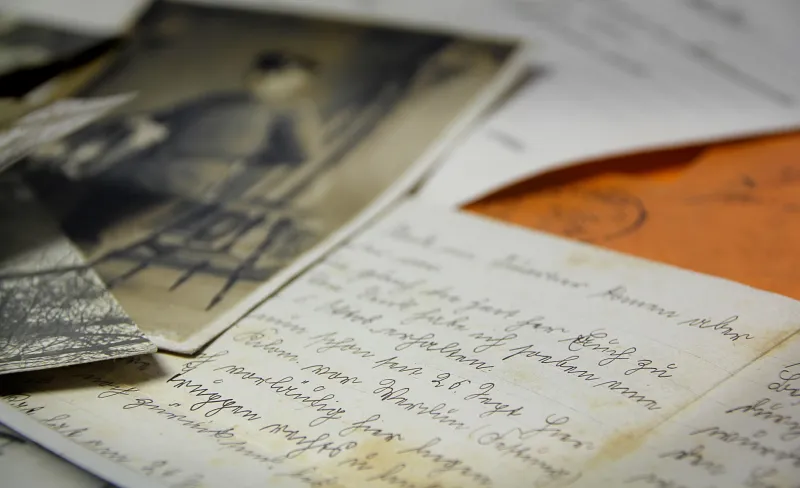
Marjorie Tillman didn't set out to become a historian. She just couldn't bring herself to throw away her grandmother's letters.
That was 2019. Today, the retired schoolteacher from Decatur, Illinois has transformed her spare bedroom into something that looks a lot like a small archive — acid-free folders stacked in labeled banker's boxes, a flatbed scanner humming on a folding table, and a hand-drawn index taped to the wall that tracks over 2,000 individual items. Letters. Photographs. Church bulletins. A handwritten ledger from her grandfather's hardware store, dating back to 1941.
"Nobody was going to come rescue this stuff," she says, matter-of-factly. "The historical society told me they didn't have space. So I figured — okay, I have space."
Marjorie is part of a quietly growing movement of amateur archivists scattered across the United States — people who've decided, often without any formal training, that the personal and community records sitting in their homes are worth saving. And not just saving in a shoebox, but actually preserving: organized, digitized, catalogued, and in some cases, shared publicly through platforms like the Internet Archive or local digital libraries.
The Stuff Museums Won't Take
Here's something most people don't realize: historical institutions turn away the vast majority of what gets offered to them. It's not cruelty — it's capacity. Museums and libraries operate under serious space and resource constraints, and they have to make hard calls about what fits their collection priorities. The result is that an enormous amount of genuinely meaningful material ends up back in someone's attic, or worse, in a dumpster during an estate cleanout.
That's where people like Darnell Okafor step in. Darnell lives in Cleveland's Glenville neighborhood, and over the past six years he's assembled what he calls a "neighborhood memory bank" — a growing collection of photographs, business records, and oral history recordings documenting Black-owned businesses in his community from the 1940s through the 1980s. The Western Reserve Historical Society, he says, expressed interest but couldn't commit to housing the full collection.
"They wanted highlights," he explains. "I wanted to keep it whole. Because the whole thing tells a different story than the best parts."
That instinct — to preserve context, not just highlight reels — is something you hear again and again from people doing this work. They're not trying to build trophy cases. They're trying to hold onto the texture of everyday life, the stuff that doesn't make it into official histories because it was never considered important enough.
Learning as You Go
Most of these home archivists are self-taught, piecing together their knowledge from online communities, YouTube tutorials, and the occasional workshop offered by regional library systems. There are Facebook groups where people troubleshoot scanner settings and argue about the best way to store nitrate film. There are Reddit threads dedicated to identifying mystery photographs. There's a whole informal knowledge network that has grown up around this work, and it's genuinely impressive.
Sophia Reinholt, a nurse practitioner in rural Minnesota, spent two years digitizing her late father-in-law's collection of photographs documenting Finnish immigrant farm communities in the Upper Midwest. She taught herself basic photo restoration techniques, reached out to the Finnish American Heritage Center for context, and eventually uploaded over 800 images to a public archive with detailed metadata.
"I made mistakes," she admits freely. "My early scans were the wrong resolution. I had to redo a bunch of them. But I got better." She pauses. "And those photos exist now in a way they didn't before. That feels like something."
Professional archivists have complicated feelings about all of this. Some are genuinely enthusiastic — they see community members filling real gaps and building relationships with materials that might otherwise be lost. Others worry about inconsistent preservation standards, about metadata that won't integrate with institutional systems, about physical items being handled without proper conservation protocols.
Those are fair concerns. But there's also something a little uncomfortable about a field critiquing the people doing the work that the field itself doesn't have resources to do.
Who Owns the Story?
One of the more interesting tensions in this movement is the question of ownership — not legal ownership, but something more like cultural stewardship. When Darnell Okafor archives photographs of Glenville businesses, who does that collection belong to? Him, personally? The community whose history it documents? Future researchers who might want access?
These aren't hypothetical questions. They shape decisions about where materials are stored, who can access them, and what happens when the person doing the archiving is no longer able to maintain the collection.
Some home archivists are starting to think seriously about succession — identifying local libraries or universities that might eventually absorb their collections, or partnering with organizations like the Densho Project or local community foundations to establish more durable homes for their work. Others are deliberately keeping things decentralized, skeptical of institutions that might impose their own frameworks on materials that were created and used outside of institutional contexts.
"I don't want some university deciding which parts of my neighborhood's history matter," Darnell says. "We already lived through that."
The Archive as Community Act
What strikes you, talking to people doing this work, is how rarely they describe it as a solo project. Marjorie has started hosting "scanning parties" at her house, where neighbors bring their own old photographs and she helps them digitize and organize. Sophia has connected with other descendants of Finnish immigrants across the Midwest, building a loose collaborative network. Darnell runs a monthly meetup at a neighborhood coffee shop where longtime Glenville residents share memories and identify people in old photographs.
The archive, in other words, becomes a gathering point. A reason to sit down together and figure out what you know, what you've forgotten, and what you want to hold onto.
That's something no institutional collection can quite replicate — the living quality of a community actively engaged with its own history, deciding together what matters and why.
There's a phrase that keeps coming up in these conversations: active custody. It's a term borrowed loosely from archival science, but these folks use it to mean something a little more personal — the idea that history doesn't just sit there waiting to be discovered. Somebody has to keep choosing to take care of it.
Marjorie Tillman is still scanning. The index on her wall has grown. She's started reaching out to other families in her county, offering to help digitize what they've got sitting in their own attics.
"People think their stuff isn't important enough," she says. "But it always is. It always is to somebody."