Rewind, Rescue, Remember: The Tape Hunters Saving America's Vanishing Voices
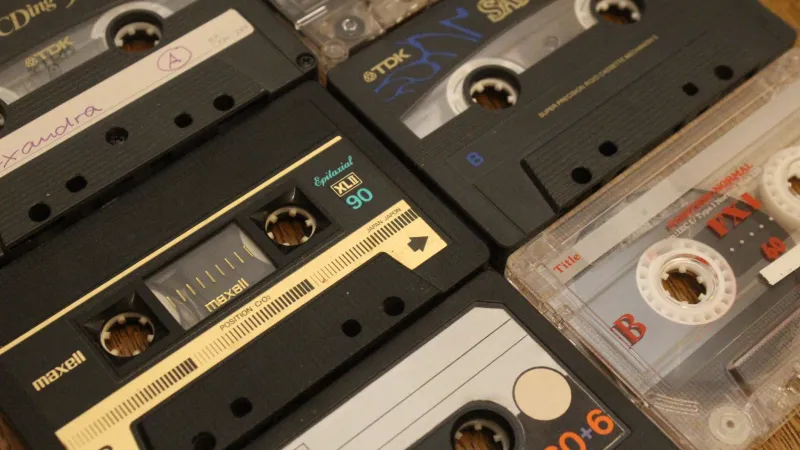
There's a particular sound that cassette archivist Denise Morales knows better than most people know their own ringtone. It's the soft, warbling drag of a tape that's been sitting in a shoebox for thirty years — a tiny mechanical moan that means the magnetic coating is starting to let go. To most ears, it's nothing. To Denise, it's a countdown.
"Every time I hear that wobble, I think about what's on that tape," she says, working out of a converted closet in her Cleveland home that she's half-jokingly renamed "the vault." "It could be somebody's grandmother. It could be a band that played one show and never got recorded anywhere else. It could be a neighborhood meeting from 1987 where people were fighting to save their block. And once that tape goes, it's just — gone."
Denise is part of a sprawling, loosely connected movement of everyday Americans who've decided that the analog past is worth saving, even when — especially when — no one else is stepping up to do it.
The Stuff Institutions Left Behind
Here's the thing about official archives: they tend to collect what already looks important. University libraries chase famous names. Historical societies fill their shelves with documents tied to civic milestones. What gets left out is the texture of ordinary life — the recordings that felt too small, too local, too personal to bother preserving.
That's where cassette tapes live. From roughly the mid-1960s through the early 2000s, the format was cheap, portable, and everywhere. People used it to record family reunions, church sermons, neighborhood oral history projects, local punk shows in someone's garage, late-night calls to AM talk radio. It was the people's medium, which also meant it was the medium most likely to end up in a landfill when the person who made it passed away or moved across the country.
"Institutional archives have incredible value, but they have blind spots the size of whole communities," says Marcus Webb, who runs a volunteer tape digitization project out of a community center in Birmingham, Alabama. "The stuff we're finding — recordings of civil rights-era church meetings, blues musicians who never cut a proper record, neighborhood leaders talking through problems that are still problems today — none of that was ever going to end up in a university collection. It just wasn't on anybody's radar."
Marcus's project, which operates on donated equipment and weekend volunteer hours, has digitized more than four hundred tapes in the past two years alone.
The Art of the Rescue
Saving a cassette tape is not as simple as dropping it in a deck and hitting play. Tapes that have been stored in attics or garages have often suffered through decades of heat, humidity, and neglect. The binder that holds the magnetic particles to the plastic backing can break down, leaving the tape sticky and unplayable — a condition archivists call "sticky shed syndrome," which sounds almost charming until you realize it means the tape will shred itself the moment it moves.
The fix, counterintuitively, is to bake the tape in a food dehydrator at low heat for several hours, which temporarily restores the binder and gives you a narrow window to capture the audio before it degrades again. It's one of those techniques that sounds like folklore until you watch it work.
Beyond the physical rescue, there's the cataloging work — logging what's on each tape, tagging it with names, dates, and locations, and uploading it to platforms where communities can actually find and use it. That part is slow, painstaking, and mostly invisible. It's also, the collectors will tell you, the part that matters most.
"Digitizing a tape is the easy part," says Yolanda Ferris, who coordinates a regional tape archive network connecting volunteers across the Pacific Northwest. "If you just throw the audio file in a folder somewhere and nobody knows it exists, you haven't really saved anything. The preservation is in the findability."
More Than Nostalgia
It would be easy to frame this movement as a nostalgia trip — analog romantics pushing back against the streaming age. But spend any time talking to the people doing this work, and a different picture emerges. This isn't about fetishizing old technology. It's about accountability to the people who came before.
In Chicago, a collective called Open Reel Neighbors has been gathering tapes from longtime South Side residents and digitizing them as part of a broader neighborhood history project. What they've found has surprised even them: recordings of community organizing meetings from the 1970s and 80s, interviews with elders who've since passed, musical performances from block parties that were the cultural heartbeat of their era.
"These tapes are evidence," says collective member Jerome Tate. "Evidence that these communities existed, that they were vibrant, that people were working hard and making art and fighting for their neighborhoods. That history belongs to the people who lived it. We're just making sure it doesn't disappear."
That sense of ownership is central to how most grassroots tape archives operate. Unlike institutional collections, which often control access and require researchers to navigate formal processes, community-based archives typically prioritize returning the material to the families and neighborhoods it came from. Digitized files get shared directly with contributors. Local libraries and community centers get copies. The goal is circulation, not curation.
The Clock Is Ticking
Experts who study magnetic media preservation are blunt about the timeline. Most cassette tapes manufactured before 1990 have a functional lifespan of somewhere between thirty and fifty years under ideal storage conditions. Under the conditions most tapes actually experience — hot attics, damp basements, the backs of moving trucks — that window is considerably shorter. We are, right now, in the critical decade for saving what's left.
The grassroots archivists know this. It's why so many of them work with a particular urgency that can look, from the outside, like obsession. Denise Morales sometimes pulls twelve-hour sessions in her Cleveland vault, moving through tape after tape, headphones on, watching the waveforms scroll across her screen. She's not getting paid. She's not building a career. She's just trying to make sure the wobble doesn't win.
"Every tape I get through feels like a victory," she says. "Every tape I don't get to in time — that one stays with me."
Somewhere right now, in a shoebox in a closet in a house where someone's grandmother used to live, there is a tape. On it, maybe, is a voice telling a story that exists nowhere else on earth. The cassette collectors are coming for it. The only question is whether they'll get there in time.
If you've got old tapes gathering dust and want to connect with a local preservation volunteer, check the Open Origins Exchange community board — grassroots archivists are actively looking for collections to rescue.