Thumbtacks and Trust: Why the Humble Bulletin Board Is Quietly Outlasting the Algorithm
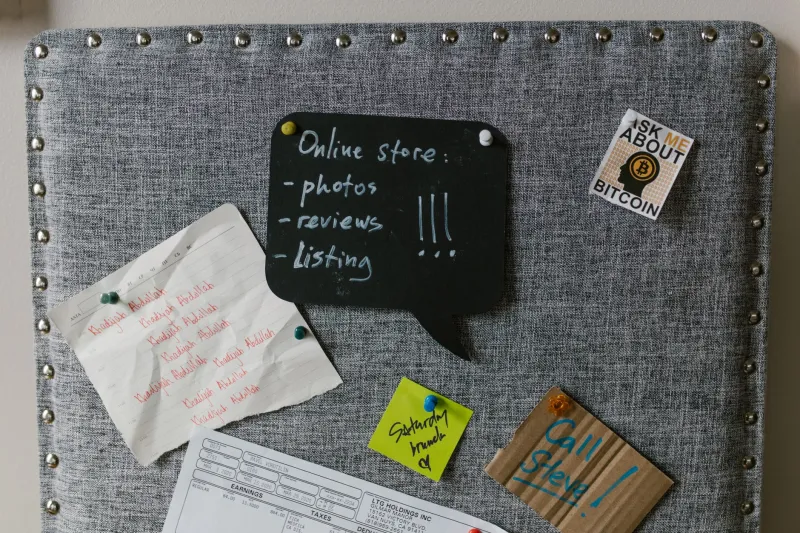
Somewhere in Asheville, North Carolina, there's a bulletin board outside a coffee shop that has been, at various points in the last two years, a job fair, a grief support group, a political debate, a lost-and-found service, a neighborhood book exchange, and the starting point for at least two documented friendships and one confirmed romance.
It's also just a corkboard with thumbtacks. Nobody owns it. Nobody moderates it. Nobody monetizes it. It just exists, and people use it, and things happen because of it.
In the grand sweep of technological history, this is not impressive. In the current moment, it kind of is.
The Board That Never Went Away
Here's the thing about bulletin boards: they never actually disappeared. While the tech industry spent twenty years convincing us that all human connection would eventually migrate to screens, the corkboards kept doing their thing in laundromats and church lobbies and community center hallways. Quietly. Persistently. Without a single algorithm deciding who got to see what.
What's changed recently isn't the boards themselves — it's how people are thinking about them. There's a growing awareness, especially among younger adults who've grown up inside social media ecosystems, that something about those platforms feels engineered to prevent the exact kind of connection they promise. The timeline shows you what will keep you scrolling, not what will make you call your neighbor. The notifications are designed to bring you back to the app, not to bring you to a block party.
A corkboard has no such agenda.
"It's so dumb, honestly, but that's the point," says 29-year-old Jamie Ostrowski, who manages the bulletin board outside a worker-owned grocery co-op in Madison, Wisconsin. "There's no algorithm deciding that the lost dog flyer is more 'engaging' than the notice about the tenant meeting. It's all just there. You look at it. You decide what matters to you."
The People Who Tend the Boards
Not every bulletin board has a Jamie, but the ones that thrive usually have someone paying attention. Across the country, a loose and mostly informal network of board stewards — nobody calls themselves that, but it's what they are — are treating these spaces with a kind of curatorial care that would surprise anyone who thinks of them as just a place to stick flyers.
In Philadelphia, a woman named Cecile Marsh has maintained the board at her neighborhood's community center for eleven years. She takes down outdated notices within a day or two. She groups things by category — housing, events, services, mutual aid — using colored paper borders she makes herself. She keeps a small basket of thumbtacks and index cards next to the board for people who didn't bring their own materials.
"I think of it like tending a garden," Cecile says. "If you just let everything go, it becomes a mess and people stop looking. But if you keep it clear and organized, people start trusting it. And when they trust it, they use it. And when they use it, stuff actually happens."
Stuff like: a woman who posted about needing childcare connecting with a retired teacher who needed something to do. A landlord who posted a rental unit getting a note from a community organizer about tenant rights — and, after a long conversation, actually changing some of his practices. A teenager who posted about starting a band finding three other musicians within two blocks.
Analog Social Networks
What these boards are doing, stripped of jargon, is social networking. Real social networking — the kind that happens between people who share physical space and might actually run into each other at the grocery store.
The difference between that and what happens on Facebook or Nextdoor is harder to articulate than you'd think, but people who've thought about it tend to land on something like: stakes. When you post something on a bulletin board in your neighborhood, you're accountable to your neighborhood. You might have to look at the person who responds to your post. That changes how you write. It changes what you're willing to say.
There's also something about the materiality of it. A flyer is a physical object that someone made, printed or handwrote, cut to size, and physically attached to a wall. That's effort. That's commitment. It signals that whatever is being communicated was worth the trouble.
"People put a lot of care into what they post," says Marcus Webb, who runs a community arts space in Oakland and maintains three bulletin boards across his neighborhood. "I see these little handwritten notes that someone clearly spent time on. They drew a border around it. They picked a colored marker. You don't do that unless you actually care."
Church Bulletins and Coffee Shop Walls
The resurgence isn't limited to corkboards on coffee shop walls. Church bulletins — those photocopied, staple-folded weekly newsletters that have been quietly circulating in American congregations for generations — are experiencing their own moment. Congregations that had moved entirely to email newsletters are bringing back the paper version, not because email doesn't work, but because there's something about a physical object in someone's hands during a shared experience that creates connection in a different way.
In rural communities especially, the church bulletin remains one of the most reliable mechanisms for local information sharing. Who needs meals delivered. Who just had a baby. Who's looking for work. Who's offering it. That information ecosystem — hyper-local, trust-based, completely outside the attention economy — is something no platform has ever successfully replicated.
The same dynamic plays out in diners, barbershops, beauty salons, and bodegas. The walls of these places have always been community infrastructure. They're just getting a little more credit for it lately.
What the Algorithm Can't Do
Social media companies have spent enormous resources trying to manufacture the feeling of community. Neighborhood Facebook groups. Local Twitter feeds. Nextdoor, with its complicated history of surveillance and racial profiling baked into a platform that was supposedly about friendliness. None of it quite replicates what happens when you're standing in front of a board, reading about your neighbor's lost cat, and someone comes up next to you and says, "Oh, I think I saw that cat."
That moment — unscheduled, unmonetized, unchoreographed — is what community actually is. The bulletin board didn't invent it. But it keeps making room for it, one thumbtack at a time.
And in a world that keeps trying to route every human connection through a server farm, there's something genuinely radical about a piece of corkboard on a wall that just lets people talk to each other.