Saving Seeds, Saving Stories: The Backyard Guardians of America's Forgotten Garden Heritage
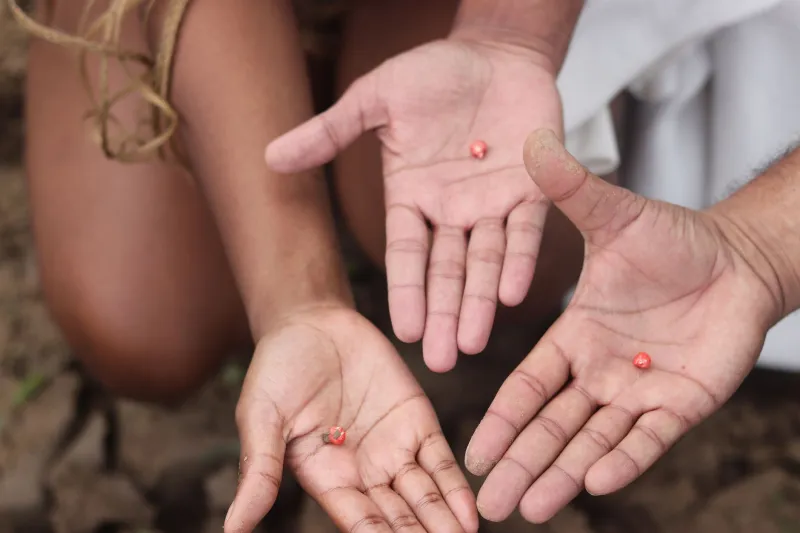
Somewhere in rural Appalachia, a retired schoolteacher keeps a Mason jar on her windowsill filled with dry, papery beans. They're not from a catalog or a grocery store. They came from her grandmother's garden, which got them from a neighbor decades before that. The beans are called Greasy Cutshorts — a variety so old and regionally specific that most seed companies have never heard of them. She grows them every summer, saves a handful before the harvest ends, and tucks them back into that jar like she's putting a letter in an envelope addressed to the future.
This is what seed saving looks like in 2024. It's not high-tech. It doesn't require a lab coat or a government grant. It happens in backyards, on apartment balconies, in community garden plots squeezed between parking lots and corner stores. And the people doing it — retirees, immigrants, young urban farmers, Indigenous land stewards — are quietly building one of the most meaningful living archives in America.
More Than a Garden Hobby
The industrial food system has been remarkably efficient at narrowing our agricultural gene pool. According to estimates from food sovereignty researchers, roughly 75 percent of the world's crop diversity disappeared over the course of the 20th century as commercial farming standardized around a handful of high-yield varieties. What got left behind wasn't just agricultural diversity — it was cultural memory. The Cherokee Trail of Tears bean. The Mortgage Lifter tomato. The Glass Gem corn that looks like something out of a fever dream. These weren't just crops. They were community currencies, survival strategies, and deeply personal inheritances.
Grassroots seed-saving networks understand this in a way that policy documents rarely capture. Groups like Seed Savers Exchange, based out of Decorah, Iowa, have been connecting home gardeners since the 1970s, but the movement has accelerated and diversified significantly in recent years. Regional seed libraries — often housed inside public libraries, community centers, or local co-ops — now exist in nearly every state. You check out seeds like you'd check out a book, grow them, and return a portion of what you harvest at the end of the season. The system runs almost entirely on trust and community goodwill.
The People Behind the Plants
What makes this movement feel so genuinely alive is who's showing up to do the work. In the Rio Grande Valley of South Texas, multigenerational Mexican-American families are reviving chile varieties that crossed the border with their great-grandparents and nearly vanished during decades of agricultural consolidation. In Detroit, urban farmers connected to West African diaspora communities are growing cowpeas and bitter leaf greens that taste like home — and like resistance. On the Navajo Nation, seed keepers are painstakingly reintroducing traditional corn and squash varieties that were disrupted by federal assimilation policies going back more than a century.
These aren't hobbyists dabbling in nostalgia. They're doing something closer to cultural reclamation. Every seed they save is a small act of defiance against the idea that history only flows in one direction — toward forgetting.
And then there are the stories that come bundled with the seeds themselves. Ask a seed saver about a particular variety and you'll almost never get just a botanical description. You'll get a name, a place, a face. "My uncle used to grow these in his garden in Calabria before he came over," someone tells you. Or: "A woman at our church swap gave me these, and she got them from her mother who grew up in North Carolina." Seeds carry genealogies. They're oral histories you can plant.
The Seed Library as Community Space
The community seed library might be one of the most quietly radical institutions in American civic life right now. Walk into the Enfield Public Library in Connecticut or the Asheville Seed Library in North Carolina, and you'll find small packets of labeled seeds tucked into card catalog drawers or repurposed library boxes. The vibe is deliberately low-key. But what's actually happening there — the exchange of living genetic material alongside the stories attached to it — is genuinely remarkable.
Seed library coordinators often describe their spaces as gathering points. People come in to browse the collection and end up staying to talk. Experienced gardeners mentor newcomers. Immigrant community members introduce varieties that expand everyone's understanding of what American gardens can grow. A seed library in Minneapolis might hold a jalapeño variety brought by a Somali refugee family alongside a Scandinavian dill strain that's been in the neighborhood for four generations. That's not a metaphor for pluralism. That's just the actual contents of the drawer.
Growing Forward
There's a practical urgency underneath all of this that's worth naming plainly. Climate change is already scrambling growing seasons and stressing crops that were bred for more stable conditions. Agricultural biodiversity — the wide genetic pool that gives plants the tools to adapt — is one of our best long-term defenses. The backyard botanists saving seeds in their garages and community plots are, whether they frame it this way or not, doing resilience work.
But the urgency isn't only ecological. It's social. When a seed variety disappears, the community practices around it tend to disappear too — the recipes, the planting rituals, the family gatherings organized around harvest time. Seed saving is one of the ways communities hold onto the texture of their own lives.
That retired schoolteacher in Appalachia knows this intuitively. She doesn't talk about biodiversity metrics or genetic preservation strategies. She talks about the beans tasting right, about her grandmother's hands in the garden, about wanting her grandkids to know where food actually comes from. She's been sharing her Greasy Cutshorts at a local seed swap for the past six years. Last spring, a young couple two counties over grew them for the first time.
The jar on the windowsill is getting a little more crowded.
Interested in finding a seed library near you? Organizations like Seed Savers Exchange (seedsavers.org) and the Seed Library Social Network maintain directories of community seed-sharing programs across the US.