What Lies Beneath: The Neighbors Quietly Mapping History in Their Own Backyards
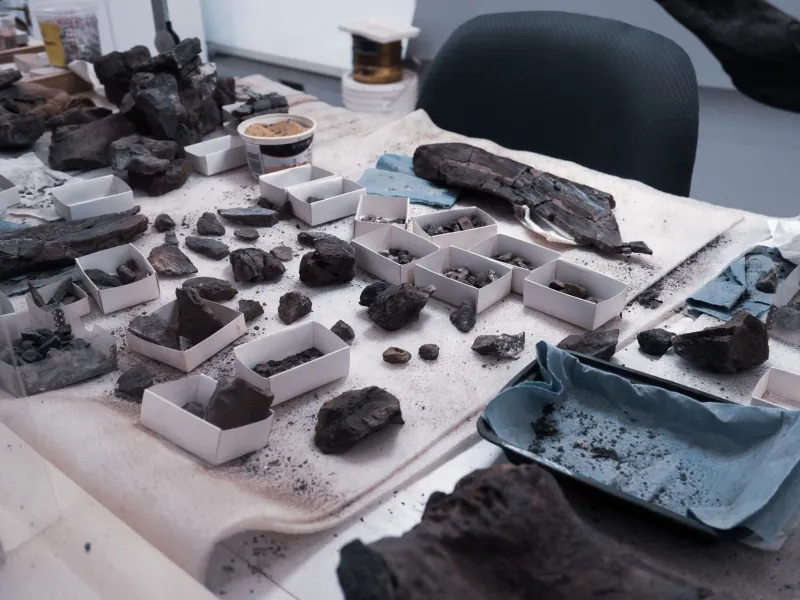
Denise Pruitt wasn't looking for history when she started pulling up the old rose bushes in her backyard in Fredericksburg, Virginia. She was just trying to make room for a vegetable garden. But about eight inches down, her shovel hit something hard—a cluster of hand-forged nails, a fragment of blue transfer-printed ceramic, and what turned out to be the corner of a brick foundation nobody knew was there.
That discovery, three years ago, sent Denise down a rabbit hole she hasn't climbed out of since. Today she's part of a loose regional network of amateur archaeologists, metal detectorists, and local history obsessives who are doing something quietly radical: mapping the hidden past of the places they actually live.
The Gaps the Professionals Leave Behind
Here's the thing about professional archaeology in the United States—it tends to follow the money and the fame. Major excavations cluster around recognized historical sites, national parks, and university-affiliated research projects. That's not a knock on the discipline; resources are limited, and priorities have to be set somewhere.
But that system leaves enormous blind spots. Entire neighborhoods built on former farmsteads, mill towns, or even earlier Indigenous settlements go largely undocumented. Foundations get paved over. Middens get bulldozed. The material record of ordinary American life—the stuff that tells you how regular people actually lived—disappears without anyone taking notes.
That's the gap that grassroots archaeologists are stepping into, one backyard at a time.
"Professional archaeology is really good at answering certain kinds of questions," says Marcus Webb, a retired schoolteacher in central Pennsylvania who helps run a local historical society's informal excavation program. "But it's not designed to ask what happened in your yard, on your block. That question falls to us."
Shovels, Detectors, and a Whole Lot of Patience
The tools vary. Metal detecting clubs—long dismissed as treasure-hunting hobbyists—have become some of the most organized and methodologically serious participants in grassroots archaeology. Many clubs now require members to log finds with GPS coordinates, photograph artifacts in situ before removal, and report significant discoveries to state historic preservation offices. The stereotype of the solitary detector guy wandering a beach is giving way to something more collaborative and more rigorous.
Other groups take a more traditional excavation approach. Neighborhood historical societies in places like coastal Georgia, the Mississippi Delta, and the mid-Atlantic states have started running supervised community digs—weekend events where residents can participate in actual stratigraphic excavation on willing neighbors' properties. These aren't free-for-alls. Many partner with community college archaeology departments or retired professionals who volunteer their expertise.
And then there's the documentation side of things. Some of the most valuable work happening right now isn't digging at all—it's careful surface survey, old map overlay, and oral history collection. Groups are using free GIS tools to stitch together historical land records, USGS topographic maps, and satellite imagery to identify spots where structures once stood, where old roads ran, where cemeteries were recorded and then forgotten.
The Stories That Surface
What comes up out of the ground tends to complicate the tidy narratives we've inherited about American history.
In a suburb of Nashville, a neighborhood dig uncovered evidence of a mid-19th century free Black community that local historical records had essentially erased. The artifacts—domestic items, agricultural tools, fragments of a small structure—weren't dramatic. But they were proof. They gave descendants of that community something physical to point to and say: we were here, and we built something here.
In a small town in New Mexico, a metal detecting club stumbled onto a scatter of Spanish colonial-era artifacts in a field that had been farmed for generations. The find prompted a broader survey that's now being conducted in partnership with a local tribal historic preservation office—a collaboration that almost certainly wouldn't have happened without the initial grassroots discovery.
Denise Pruitt's brick foundation in Fredericksburg, it turned out, was likely part of a 19th-century domestic outbuilding associated with an enslaved household. She's been working with a local preservation group and a historian from the University of Mary Washington to document the site properly. "I didn't expect any of this," she says. "I just wanted tomatoes."
The Ethics of Digging
Grassroots archaeology isn't without its tensions. The line between responsible documentation and destructive looting is real, and not everyone who picks up a metal detector or a shovel is on the right side of it. Archaeological context—the precise relationship between an artifact and the soil layer it came from—is irreplaceable. Once you disturb it, it's gone.
Most serious community archaeology groups are acutely aware of this. Many have developed their own ethics codes, require members to complete training modules, and actively discourage digging on sites that warrant professional-level intervention. The goal, as Marcus Webb puts it, is "to document, not to extract."
There's also the question of whose history is being uncovered—and who gets to tell that story. When a dig surfaces evidence of Indigenous occupation, of enslaved communities, of immigrant laborers, the communities most directly connected to those histories deserve a seat at the table. The best grassroots archaeology projects are building those relationships intentionally, treating descendant communities as partners rather than audiences.
Why This Matters Right Now
There's something deeply meaningful about the timing of this movement. At a moment when a lot of Americans are renegotiating what history means—who gets included in it, whose stories get told, what we owe to the past—the act of literally digging up evidence feels like a form of civic participation.
You're not waiting for a museum to tell you what happened here. You're finding out for yourself, in collaboration with your neighbors, on land you actually live on.
That's a different relationship to history than most of us were taught. It's messier, more contingent, more personal. But it's also more honest. The ground doesn't care about official narratives. It just holds what happened.
Denise Pruitt has her vegetable garden now, carefully laid out around the documented perimeter of that old foundation. She says she thinks about the people who lived there every time she goes out to water the tomatoes.
"It changes how you feel about a place," she says. "You stop thinking of it as just your yard. You start thinking of it as something you're borrowing for a while."
That's the shift grassroots archaeology is quietly making, one backyard at a time—turning private property into shared memory, and turning ordinary neighbors into the custodians of a history that almost nobody else was going to bother to save.