Sealed With a Story: The Quiet Keepers Saving America's Love Letters Before They're Gone Forever
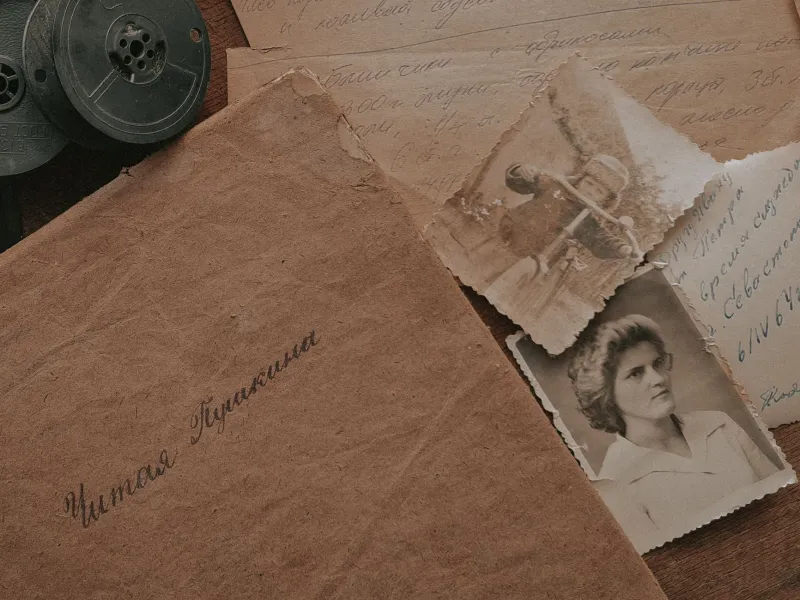
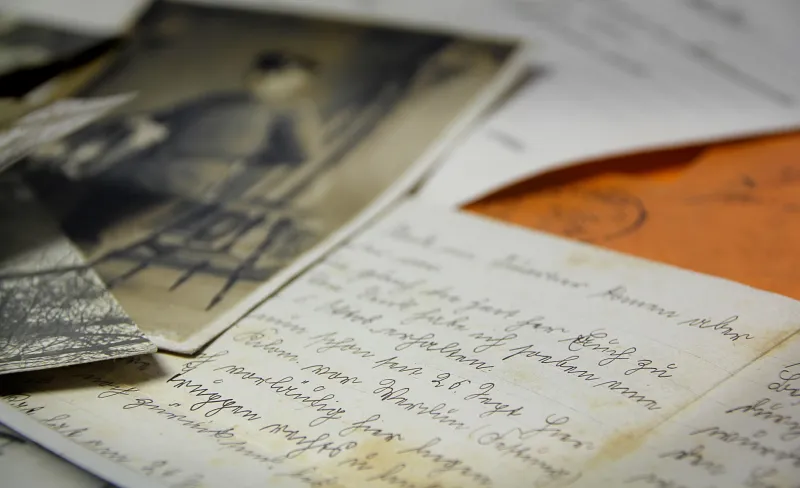
Somewhere in a church basement in Dayton, Ohio, a retired postal worker named Gloria is carefully unfolding a letter written in 1943. The paper is soft at the creases, nearly translucent where a thumb has touched it a thousand times. It's a love letter — from a man named Raymond to a woman named Esther — and Gloria has never met either of them. She found the letter in a box at an estate sale for three dollars.
"I couldn't just leave it there," she says. "Someone wrote that from their whole heart. It deserved more than a landfill."
Gloria is one of a quietly growing number of Americans who've made it their informal mission to preserve the romantic and intimate records of ordinary people's lives — the handwritten notes, the wedding programs, the anniversary cards, the vows typed on manual typewriters and the texts printed out because someone thought they were too important to lose. They're not academics. They're not archivists with credentials. They're just people who believe that how Americans have loved each other matters, and that it's disappearing faster than anyone wants to admit.
The Archives Nobody Asked For
Traditional historical preservation tends to chase the dramatic — wars, elections, disasters, movements. But the people doing this grassroots love-letter work are making a different argument: that intimacy is history, too. That a letter written by a sharecropper to his wife in 1931, or a same-sex couple's hand-fasted vows from 1987, or a teenager's note slipped through a locker vent in 1965 tells us something about America that no policy document ever could.
In Chicago, a collective called Paper Hearts Project has been quietly digitizing personal correspondence for about four years now. They work out of a shared community art space in Pilsen, and their volunteers range from retired teachers to college students doing independent study hours. They've processed thousands of pieces of correspondence, tagging each one with metadata — decade, relationship type, region, demographic context where known — and making it searchable through a free public database.
"We're not trying to be the Smithsonian," says one of the project's co-founders, a graphic designer in her early thirties named Marisol. "We're trying to make sure that when someone's grandkid asks what love looked like in 1958 or 1978 or 2003, there's actually an answer they can find."
Scrapbooks as Social Infrastructure
Not every effort is digital. Across smaller cities and rural communities, scrapbooking collectives have quietly evolved into something more emotionally ambitious than their craft-store origins might suggest. What started as hobby groups trading tips on acid-free paper and adhesive techniques has, in some corners, become a kind of community memory practice centered specifically on relationships and family love stories.
In Asheville, North Carolina, a group called Bound Together meets every other Saturday at a local library branch. Members bring their own materials, but they also bring family photographs, old letters, and wedding ephemera — sometimes their own, sometimes inherited, sometimes found. The group's unofficial archivist, a woman named Deb who spent decades as a middle school librarian, says the work has become something she didn't expect.
"People cry," she says simply. "Not in a bad way. In a way that feels like relief. Like they've been carrying something and they finally got to set it down somewhere safe."
The act of physically preserving something — choosing an image, placing it on a page, writing a caption that gives it context — forces a kind of slow attention that most of modern life doesn't allow. And doing it alongside other people, especially strangers, creates a particular kind of intimacy. You end up knowing things about someone's grandmother's first marriage that you'd never learn through ordinary conversation.
Why Love Letters Are Political
It would be easy to frame this work as sentimental, even apolitical. But the people doing it tend to see it differently. Preserving love stories is, in their view, a profoundly political act — especially when the love stories in question are ones that history has actively worked to erase.
LGBTQ+ couples whose relationships weren't legally recognized for decades. Interracial couples who married before Loving v. Virginia and lived in fear. Immigrant families whose correspondence was written in languages that American institutions didn't bother to translate or archive. These stories exist, often in private hands, and they are at genuine risk of being lost.
A letter-writing revival club in Brooklyn called Ink & Witness has made this explicitly part of their mission. They host monthly write-ins where members compose letters — to current partners, to past ones, to family members living and dead — but they also run a sister program that collects and digitizes LGBTQ+ correspondence and relationship records going back to the 1950s. The collection now includes over 800 items, from formal love letters to grocery lists annotated with inside jokes, and it's used by researchers, documentary filmmakers, and, most movingly, by the descendants of the people who wrote them.
"There was a woman who came in last spring," says one of the club's organizers. "Her aunt had passed, and she found a box of letters her aunt had exchanged with a woman she'd loved for forty years. She had no idea. She sat here for three hours reading them and crying and laughing. That's what we're doing this for."
What Gets Saved, What Gets Lost
There's a real urgency underneath all of this that the participants don't shy away from. The shift to digital communication has created a paradox: we generate more personal correspondence than ever, and almost none of it will survive. Texts disappear when phones die. Email accounts get deactivated. Social media platforms fold or change their terms of service. The physical letter, for all its fragility, has outlasted formats that seemed permanent.
But even physical materials are under threat. Estate sales, house cleanouts, moves to assisted living — these are the moments when decades of personal correspondence end up in recycling bins or dumpsters, simply because no one knew what to do with them and there wasn't time to figure it out.
Gloria, back in Dayton, has developed a loose network of estate sale regulars, thrift store volunteers, and senior center staff who know to flag anything that looks like personal correspondence before it gets tossed. She's rescued over two thousand pieces of mail in the last six years. Some she's returned to families she's tracked down through genealogy sites. Some she's donated to local historical societies. Some she keeps, carefully organized in archival boxes in her spare bedroom.
She doesn't think of herself as doing anything remarkable. But she does think of Raymond and Esther, whose letter she still has because she couldn't figure out who their descendants were.
"He called her 'my compass,'" she says. "He said she was the thing that told him which way was home." She pauses. "I think about how close that came to just being gone. And then I think about all the ones that already are."
An Exchange Worth Making
What these communities have discovered, maybe accidentally, is that preserving other people's love stories has a way of opening people up to their own. The work attracts people who are grieving, people who are estranged from family, people who've never had language for what their own relationships meant. Sitting with old letters, or helping someone else organize their grandmother's wedding keepsakes, has a way of making people more willing to talk about what love has meant in their own lives.
That's not a small thing. In a cultural moment that often feels defined by disconnection and distrust, these informal archives of tenderness are doing something that no policy or program quite manages: reminding people that vulnerability is a shared human condition, and that the record of how we've loved each other is worth fighting to keep.